MINERAL SANDS: THE QUIET ACHIEVER
The Australian mineral-sands industry is small compared to the iron-ore, coal, gold and base-metal industries. However, it is globally important in its field. And with some mineral-sands deposits in Australia containing rare earths, its profile globally is growing.
How are mineral sands formed?
s explained by Geosciences Australia, mineral sands are originally derived from rocks that have been broken down by natural weathering processes, transported in river systems and eventually deposited in beach, lake or river environments. Within beach environments in particular, processes (such as wave action) taking place over millions of years concentrate the heavy minerals into quantities that may be cost-effective to exploit.
Because sea levels have changed significantly over geological time as a result of continental drift, ancient mineral sand deposits may be distant from modern coastlines.

Mining and processing of mineral sands
In Australia, mineral sands are mined mainly in:
▪ southwest NSW
▪ northwest Victoria
▪ inland SA (around where the “s” in Australia is)
▪ north and south of Perth in WA
Some production occurs in Queensland and NT.
Mineral sands comprise compounds of two elements: titanium (Ti) and zirconium (Zr).
Following mining, processing entails the separation of mineral sands into two streams:
▪ a titanium stream, comprising mainly the compounds, rutile and ilmenite
▪ a zirconium stream, comprising zircon

Chemical formulae are as follows: rutile, TiO2, ilmenite, FeTiO3, and zircon, ZrSiO4..
Typical uses of mineral sands
The titanium stream

The main use of rutile and ilmenite is as a white pigment in paints (as shown in the white room here), plastics and cosmetics.

Around 5% of rutile and ilmenite is used to produce titanium metal. This titanium bicycle is notable for its lightness and strength.
The zirconium stream

One of the main uses of zircon is as a whitener for plates and other ceramics.

Zircon, which has a high melting point, is also an important refractory material, with zircon bricks (shown here) used in lining furnaces.
Mineral sands: Australia and the world
Australia produces one-third of the world’s zirconium concentrates (such as zircon). Other major producers are South Africa and Mozambique.
China, followed by Mozambique and South Africa, are the world’s main producers of titanium concentrates. Australia is responsible for a little over 5% of world production.
However, it has a much greater share of global titanium reserves: 76% for rutile and 35% for ilmenite (according to the US Geological Service).
Australia has three major producers of mineral sands: Iluka Resources (Australian-owned), Tronox (US-owned) and Iwatani (Japanese-owned). There are several smaller producers.
Mineral sands and rare earths
With increasing world concern about the dominant position China holds in the mining and processing of rare earths, major efforts are underway in the US, Australia and other countries to expand this sector.
In particular, the US and Australia signed last month an agreement aimed at “intensifying their cooperative efforts to accelerate the secure supply of critical minerals and rare earths”.
In this context, Iluka Resources has been stockpiling the mineral, monazite, since the 1990s.
Monazite, which is a by-product of its mineral-sands operations, contains several rare-earths, notably neodymium, praseodymium, dysprosium and terbium.
All of these are important for rare-earth magnets, the strongest type of permanent magnet.

Monazite
Reflecting the spirit of the recent US-Australia agreement, Iluka Resources and the Federal government are co-financing a processing plant at Eneabba in WA (280 kilometres north of Perth) to extract rare earths from Iluka’s monazite.
Site works are underway, with commissioning of the $2-billion plant expected in 2027. The plant will process, not only Iluka’s monazite, but also rare-earths minerals from other suppliers.

Engineering design of Stage 2 of the Eneabba plant, by Tetra Tech Proteus. The process includes conditioning, flotation, filtration and dewatering to produce two products: a high-grade 90% monazite concentrate and a gravity concentrate consisting predominantly of zircon and ilmenite.
In addition, Iluka’s mineral-sands project in the Wimmera region of Victoria is a potential source of monazite.
Not every rare-earths deposit in Australia includes monazite or other rare-earths minerals.
However, Tronox Australia is reported to be considering investing in rare-earths production in Australia, using monazite available to it from its mineral-sands operations.
In addition, the Goschen mineral-sands project in Victoria will produce monazite as a by-product. A final investment decision for this project is expected by mid-2026.
In short, Iluka Resources will be a major supplier of both mineral-sands and rare-earths, with at least few others likely (with government assistance) to follow in Iluka’s footsteps.
Don’t miss an issue!
To stay connected and up to date with news within the mining industry, subscribe to the Mining Monitor. We’ll email a copy through to you at the beginning of each month.
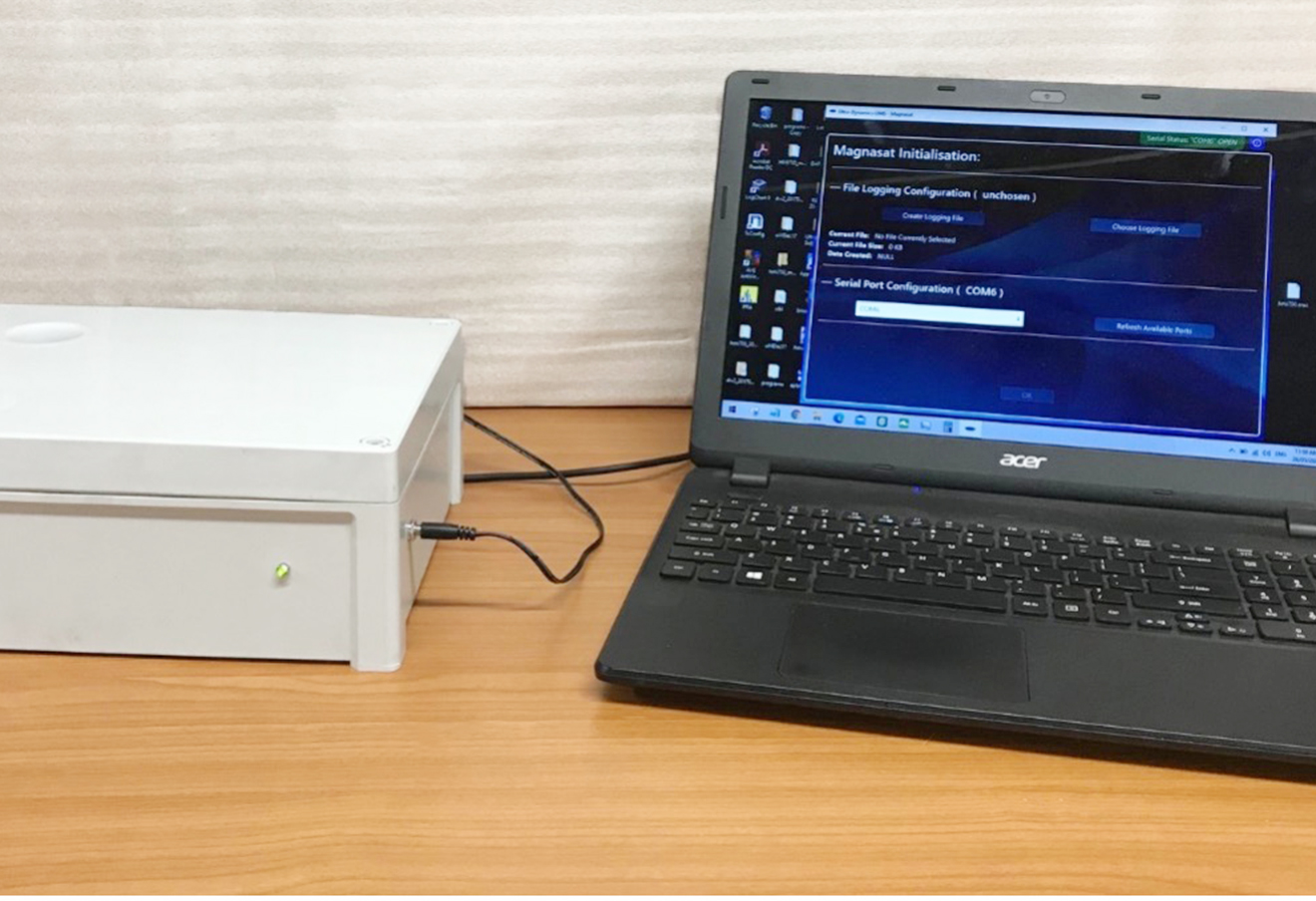
MAGNASAT Magnetic susceptibility meter
MAGNASAT is a bench top system designed for the measurement of the magnetic properties of small samples of material. The system is easy to use and provides a result within a matter of seconds. Sample preparation typically requires crushing the sample to <2mm.
Find out more about the system here.
Talk To One of Our Specialists
We are striving to be the leading supplier of on-line process measurement technologies and are keen to offer you: