COAL: NOT DEAD YET
In 1897, in response to a newspaper report that he had
died, American writer Mark Twain said that “the report of
my death was an exaggeration” (he lived another 13
years).
The widespread view that coal will soon be dead may also
be an exaggeration.
Thermal coal, used for electricity production, makes up
over 85% of global coal production. (The other form of
coal, metallurgical coal, is used for steel production).
The case against thermal coal is that it is a major
contributor to greenhouse-gas emissions. The case for
thermal coal is that it provides cheap, reliable electricity,
which wind and solar energy – the favoured replacements
for coal – cannot do.
Coal is strong in Asia, emerging in the US and starting to
be discussed in Europe. What does this mean for
Australia?

Asia, where thermal coal is dominant
Asia produces and consumes over 80% of the world’s thermal coal. China, followed by India and Indonesia, are the main producers. Regarding consumption, the share of coal in electricity production is:
| 60% plus: Mongolia, India, Indonesia | 40-50%: Taiwan, Laos |
| 50% plus: China, Vietnam, Philippines | 30-40%: Japan, South Korea, Cambodia |
(The share in Australia is 45%, having dropped from over 80% in the 1990s.)
Why such reliance on coal-fired electricity in Asia? Because ▪ most Asian countries are strongly committed to
economic growth ▪ central to economic growth is cheap, reliable electricity ▪ central to cheap, reliable electricity in
most of Asia is coal.
As in the rest of the world, use of renewables in Asia has increased over the past 20 years. However, the share of
renewables is still relatively small, amounting to 15% or less of electricity generation, excluding China, where
renewables amounted to 20% in 2024. The strong growth of renewables in China has helped it become the world’s
leading producer of wind turbines and solar panels, dominating markets around the world (including Australia).
Electricity availability is still relatively limited in much of Asia. For example, in per capita terms, Australians consume
around six times the electricity consumed by Indonesians or Indians – and Americans consume around seven times.
Developing Asian countries are keen to reduce this gap. Most see this as requiring coal and, to a limited extent,
natural gas (important in Thailand, Bangladesh and Pakistan, but with reserves in these three countries declining).
In seeking growth based on coal, Asia is following the view of the Canadian-Czech scientist, Vaclav Smil, that “fossil
fuels are the most important factor in explaining the advance of modern civilisation”.
Or as stated in 2022 by Yemi Osinbajo, a former Nigerian vice-president, “no-one in the world has been able to
industrialise using renewable energy”.

Source: Wikimedia Commons
United States, where thermal coal may become more important
In the year 2000, some 50% of electricity in the US came from coal. In 2024, the figure was 15%.
This decline is partly explained by the doubling of natural-gas production since 2000. But also important was the opposition to coal from the Obama and Biden administrations (2009-2017 and 2021-2025).
The Trump administration is reversing this opposition, by halting the retirement of coal-fired plants, encouraging the construction of new ones and abolishing regulations favouring renewables. In addition, it is opening-up discussion of climate science, challenging the view that greenhouse-gas emissions are the driver (not just one cause) of global warming.
US electricity demand barely grew in the two decades up to 2020, but has grown steadily since and is expected to grow by over 2% per year in coming years. The main reason for for example,“America’s largest power grid is under strain as data centers and AI chatbots consume power faster than new plants can be built” (Reuters, 9 July 2025).
The new plants will require reliable electricity, to come overwhelmingly from coal, natural gas and nuclear energy.
Thermal coal is produced mainly in the north-western states of Wyoming and Montana. The US has the largest coal resources in the world, but expanding thermal-coal production will not necessarily be easy.
First, in making new investments, coal companies have to be confident that government support for coal will continue beyond the Trump administration. Second, additional port capacity has to be found for exports. These currently go through Canada, because of restrictions on port access for coal in the western states of California, Oregon andWashington (all controlled by the Democrats). Significant expansion of port capacity in Canada is unlikely.
Notwithstanding these points, the Trump administration’s support for coal and a re-examination of climate science represent a major turnaround in prevailing attitudes on these two issues. This turnaround is likely to change US energy policy significantly and encourage a re-thinking on coal in other countries.

Source: Wikimedia Commons
European Union (EU) – is a return to thermal coal possible?
Thermal coal used to be important in the EU. However, wind and solar energy are now much more important, forming34% of EU electricity production in 2024. (The Australian figure in 2024 was 31%, likely to increase in 2025).
The main drivers of wind and solar energy in the EU are Denmark, Germany, UK, Netherlands, Spain, Ireland, Italy and Belgium. These countries have among the highest electricity prices in the world, primarily because of the need to build, in effect, two sets of electricity facilities – one for wind and solar, the other to back up wind and solar with reliable electricity.
This is leading to questions being asked in the EU about the economic risks of renewables. Questions are also being asked about the security risks, particularly following the electricity blackouts in Spain and Portugal in late April 2025.
German chancellor, Friederich Merz, said last month that “Germany should consider a pause on shutting down its remaining coal power plants until new gas-fired stations are ready to replace them” (Bloomberg, 11 September 2025).
Italian Prime Minister Giorgia Meloni warned in May “that rigid green policies could devastate Europe’s industrial base” (Reuters, 17 May 2025).
UK opposition leader, Kemi Badenoch, says that net-zero greenhouse-gas emissions cannot be achieved by 2050″without a serious drop in our living standards or by bankrupting us” (BBC, 18 March 2025).
UK consultant, Kathryn Porter, says that the UK may face an “unpalatable” option, namely, “a return to coal”, given the long lead times for new gas-fired and nuclear plants (Spiked, 10 September 2025).
Challenges are emerging within the EU to its strong commitment to wind and solar power under challenge.
Australia: walking a lonely course
In Australia, the Federal government aims to increase the share of wind and solar energy in electricity production to75% by 2030 (and the share of all renewables to 82%, with hydro-energy suppling around 7% of electricity).
Over the next five years, this means doubling the share of wind and solar energy in electricity production over the likely 2025 level, with steady increases there after in pursuit of the government’s target of net-zero emissions by 2050.
Achieving these targets is unlikely, given ▪ the inability of wind and solar energy to produce reliable electricity ▪ the inability of batteries to counter this ▪ the government’s opposition to nuclear power, which would assist it greatly in providing reliable and emissions-free electricity (although not necessarily cheap electricity) ▪ political difficulties facing the Federal and state governments in expanding wind and solar electricity in regional areas.
In addition, current policy will be expensive for electricity consumers. Up to the early 2000s, electricity prices inAustralia were low by world standards; after 20 years of increasing dependence on wind and solar energy, they are now high – and are likely to go higher because of the duplication in facilities required (one system for wind and solar electricity, one system to back this up).
Australian governments (Federal and state) underestimate the benefits of thermal coal. It is
▪ our cheapest form of reliable electricity
▪ our fourth-highest export commodity (on a par with gold and behind metallurgical coal, liquefied natural gas and iron ore)
▪ central to the prosperity of communities such as the Latrobe Valley in Victoria, the HunterValley in NSW and communities in southeast Queensland.
Australian coal reserves are the third-highest in the world, with Victoria alone having enough coal for another 1,000 years of use. Not exploiting these reserves entails serious economic losses, both domestically and for exports.

Australia’s opposition to thermal coal is looking to be at odds with global developments. If this continues, Australia will find itself swimming against the tide and, in time, will need to change course.
Changing course means relying on coal, natural gas and/or nuclear energy for electricity, not wind and solar energy. New technology may emerge, meaning ▪ new technology for generating electricity, and/or ▪ new battery technology coming to the rescue of wind and solar energy.
However, such developments are unknown at present and can’t be the basis of current policy.
Sources of statistical information in this article include Statistical Review of World Energy 2025; International EnergyAgency; US Geological Service; Office of the Chief Economist, Canberra; Statista; and Worldometer.
Don’t miss an issue!
To stay connected and up to date with news within the mining industry, subscribe to the Mining Monitor. We’ll email a copy through to you at the beginning of each month.
hydroSCAN MICROWAVE MOISTURE MONITOR – ON CONVEYOR
Conveyor Belt Installation
On-Conveyor Microwave Moisture Monitor
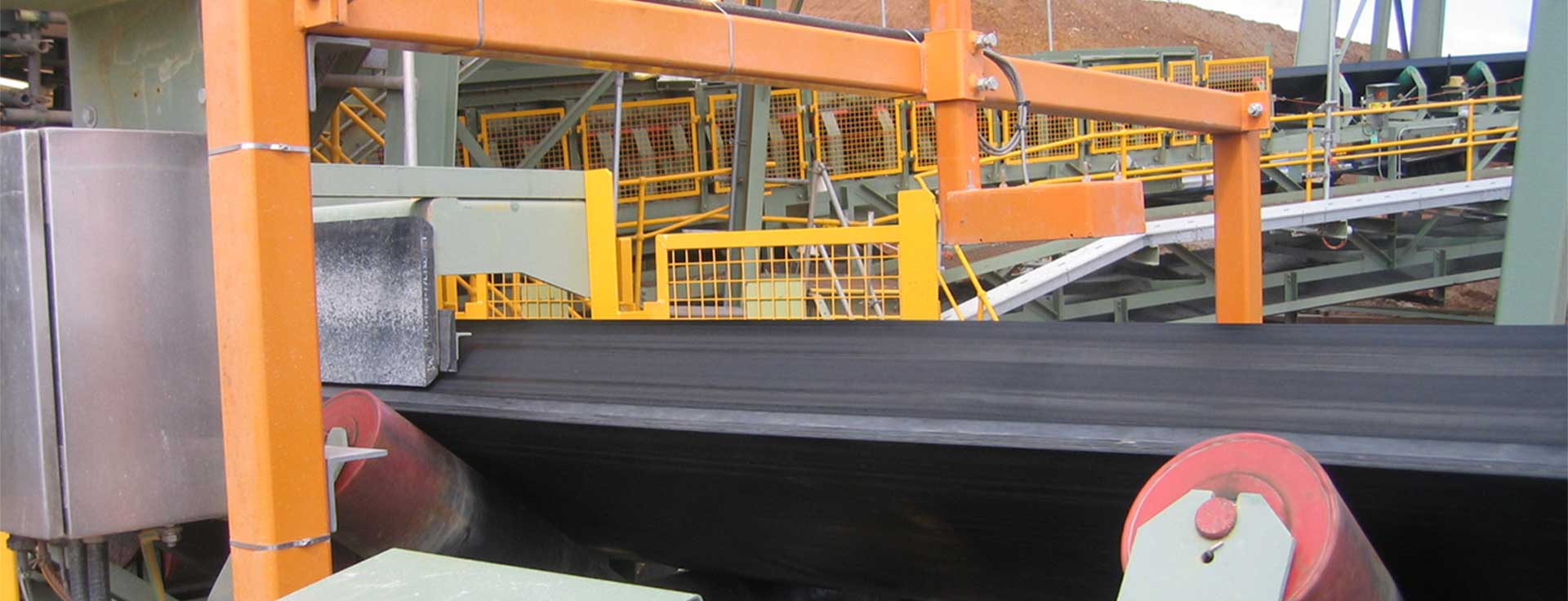
hydroSCAN is supplied with a rugged Support Frame which allows easy, accurate alignment the microwave transmitter and receiver housings on site. The system is also supplied with an electrical enclosure which houses the PLC which is used for data processing.
Find out more about the system here.
Talk To One of Our Specialists
We are striving to be the leading supplier of on-line process measurement technologies and are keen to offer you: